

The morning when the market felt quieter
This morning, over coffee in Dubai, I reviewed a few recent comparables with an Italian investor. His question was simple: “Is the market slowing down?”. Today, the answer cannot be a simple yes or no. Dubai is not telling a flat story. It is entering a phase where volume alone says less, and the quality of demand says much more.
The numbers show depth, but less automatic momentum
Dubai Land Department reported AED 252 billion in real estate transactions for the first quarter of 2026, with 60,303 transactions and AED 173 billion in investments across 57,744 investment transactions. Q2 and July reports add a more precise reading: Savills recorded 35,884 residential transactions in Q2, down 19% quarter on quarter, with 76% of sales off-plan and 27,300 homes handed over; July data shows 13,872 sales worth AED 34.5 billion, with an average price of around AED 1,680 per square foot.

The real shift is that segments are no longer moving together
The interesting point is not the slowdown itself, but the divergence. Chestertons Global’s Q2 report, covered today by financial media, describes a more selective market: industrial and retail remain strong, offices are shifting toward smaller spaces, while residential activity is becoming more measured. This is what many headlines miss: Dubai is not one single market, but a collection of micro-markets with different speeds, risks and liquidity.
For Italian investors, the decision process changes
An Italian investor should not only ask whether Dubai is “going up” or “going down”. The right question is where the price is still justified by rent, real demand, upcoming supply and the ability to resell without depending only on the next launch. In a selective phase, paying the average market price can be a weak decision. What matters is entering the right segment, with a clear exit plan and verified numbers.
Why Rema Living starts from risk, not from the brochure
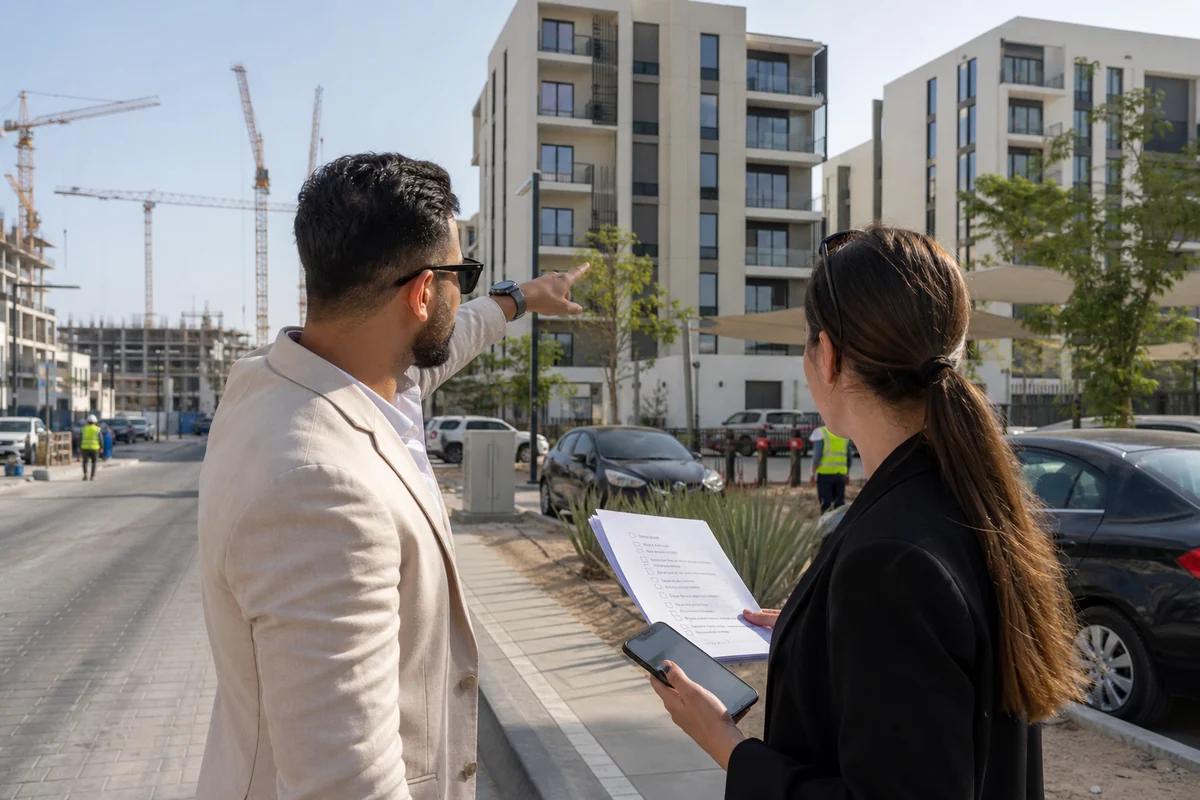
At Rema Living, I do not start from the rendering, the payment plan or the promise of the moment. I start from the uncomfortable question: what happens if the market becomes less generous? From there, we review the district, developer, price per square foot, realistic rent, recurring costs, nearby handovers and resale potential. If you want to assess an investment with this method, you can book a meeting with Rema Living and work on concrete data, not commercial excitement.
The practical check before your next viewing
Before reserving a unit, always ask for five things: closed transactions in the same building or community, rents actually achieved, the competing handover calendar, estimated service charges and a 24- or 36-month exit strategy. If one of these answers is vague, it is not a minor detail. It is the point to clarify before signing.