
Will the Strait of Hormuz tensions reshape Dubai's real estate market prospects? Could escalating geopolitical risks affect investment flows to Dubai? What does this mean for international investors eyeing the UAE in 2026?
Geopolitical Context: Strait of Hormuz and Regional Dynamics
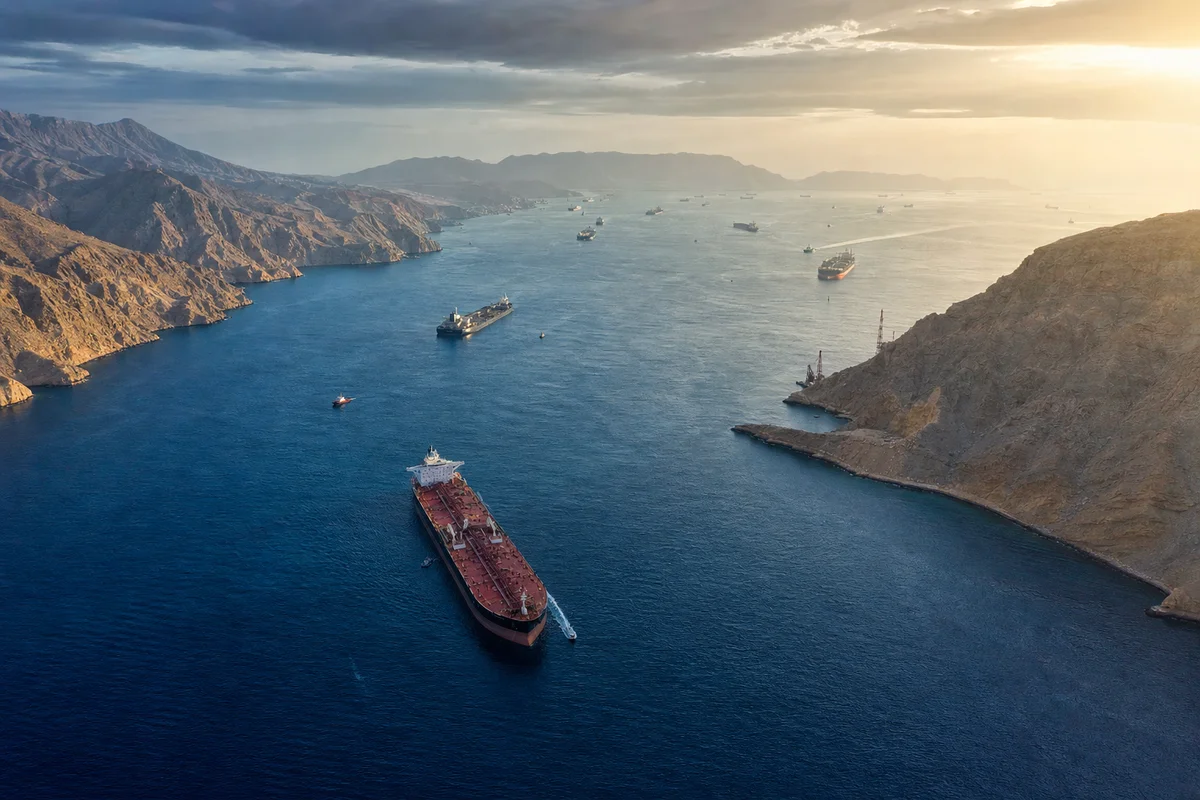
The Strait of Hormuz remains a critical chokepoint, channeling approximately 20 to 21 million barrels of oil daily, which accounts for about 20-25% of the global consumption and roughly one-third of maritime oil trade, according to the International Energy Agency (IEA). In May 2026, amid ongoing regional tensions following the USA-Israel conflict earlier this year, Iran intensified its strategic stance by declaring it will no longer allow US military vessels to transit the strait (Gulf News, 14 May 2026).
Despite a ceasefire reached in April 2026, tensions persist, keeping the Strait a focal point of geopolitical risk. However, the BESA Centre (7 May 2026) highlights that Iran is structurally more vulnerable to disruptions in the Strait than its regional adversaries. Meanwhile, the UAE and Saudi Arabia have proactively invested in alternative oil export routes to mitigate potential risks.
Impact on Dubai Real Estate Market: Q1 2026 Data and Trends
Despite geopolitical uncertainties, Dubai’s real estate market demonstrated remarkable resilience in Q1 2026. According to Arabian Business (13 May 2026), Dubai recorded AED 139.2 billion ($37.9 billion) in real estate transactions across 44,400 deals during the first quarter. Off-plan sales surged by 36% year-on-year, reaching AED 73.4 billion from AED 53.9 billion in Q1 2025, while secondary market transactions grew by 9% to AED 65.8 billion.
Key areas driving market activity include Dubai South, Jumeirah Village Circle (JVC), Business Bay, Dubai Marina, and Dubai Islands. Notably, Moody’s assessment of UAE developers points to enhanced resilience against previous market cycles, indicating strong fundamentals even amid global uncertainty.
What Italian Investors Should Consider: Scenarios and Opportunities
For Italian investors, the evolving geopolitical landscape presents both challenges and opportunities. While some analysts, such as Danube/MSN, forecast a potential 20% market dip in 2026 due to heightened tensions, a strong recovery is anticipated subsequently. This cyclical behavior, combined with Dubai’s strategic investments in infrastructure and alternative energy corridors, suggests that long-term growth remains promising.
Italian buyers can leverage the current market dynamics to acquire prime properties in emerging zones like Dubai South and Business Bay at competitive prices, anticipating value appreciation as stability returns. Moreover, the UAE’s robust regulatory environment and developer resilience provide a secure investment framework, appealing to risk-conscious international investors.
Why Rema Living Offers Practical Answers for Italian Investors
Rema Living (rema.ae) stands out as an expert partner for Italian investors navigating Dubai’s complex real estate market. Our deep understanding of both UAE market trends and Italian investor priorities ensures tailored advice, helping clients identify high-potential assets while managing geopolitical risks pragmatically.
With on-the-ground expertise and personalized service, Rema Living facilitates seamless transactions, from off-plan projects to lucrative secondary market deals, aligning with your investment goals in a dynamic 2026 market.
Practical Common-Sense Advice for Navigating 2026 Dubai Real Estate
Investors should maintain a balanced view: monitor geopolitical developments closely but avoid reactive decisions based on short-term volatility. Diversification within Dubai’s varied real estate sectors—residential, commercial, and mixed-use—can mitigate risks.
Engage with trusted local experts, verify developer credentials, and prioritize properties in well-established or rapidly growing communities. Finally, keep abreast of government initiatives and infrastructure projects, which often signal areas of future growth and stability.

